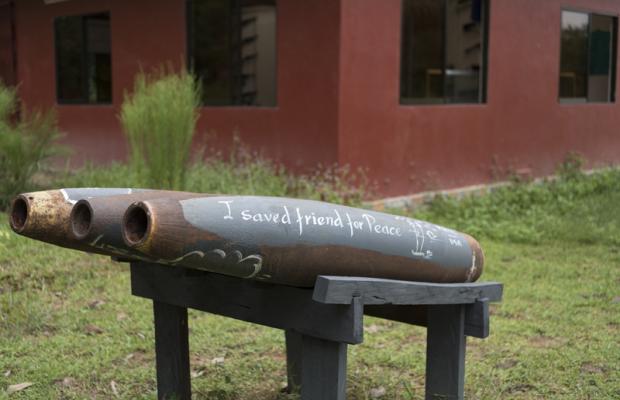
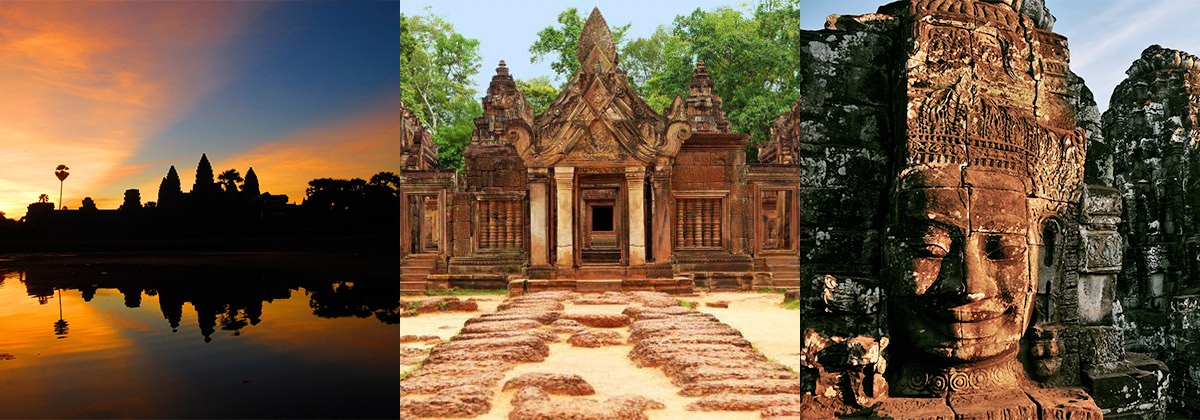
Our museum is located in Siem Reap, Cambodia. It is on the grounds of the great temples, including Angkor Wat, which served as a military command post and prison during the Cambodian Civil War and the reign of Khmer Rouge under Pol Pot.
The War Remnant Museum was initiated through cooperation with the Cambodian Army.
Our desire is that you will be enriched by your experience with us and leave with a new story to tell about Cambodia’s past, but more importantly about a new hope for Cambodia’s future.
The War Remnant Museum is more than a museum. It is also a center that provides education/training and support for dozens of at-risk people and landmine survivors, many whom are part of families suffering overwhelming hardships. The War Remnant Museum was created so that it might serve as a place of healing for bodies, hearts and minds and an important role in the development of society. We believe that love, support, education and teaching new skills will help secure better opportunities in life.
Before the Civil War
Our intention is to provide a general overview of Cambodia’s history, from the earliest known records up until modern time. This is by no means a complete or scholarly report; it’s simply a summary of major points. Since the focus of our museum is the sad civil war that has done – and continues to do – damage to our people, that section will be the most extensively developed.
Decades of War in Cambodia
The years 1965 – 1991 were a time of horrible war and destruction in Cambodia. The strife was both internal and external, marked by civil war, being an innocent bystander in the Vietnam War, genocide and famine, and international war with Vietnam.
Civil War
Cambodia remained neutral through the early 1960’s but slowed became more open to the People’s Republic of China, as Prince Sihanouk expected their victory and future dominance in Southeast Asia. This met with resistance from conservatives, who were represented by Minister of Defense Lon Nol.
Cambodian General, Prime Minister Lon Nol
At the same time, North Vietnamese forces began to encamp on the Cambodian side of the border, to provide a logistical advantage against the South Vietnamese and US. The latter forces began bombing raids beginning in 1969, which killed between 40,000 and 150,000 Cambodians.
With both internal economic struggles and external political problems, Cambodia was torn. Lon Nol led a National Assembly vote which unanimously ousted Sihanouk while he was abroad. Vietnamese were scapegoated, sometimes hunted by neighbors and soldiers. Official efforts were to round them up in detention camps.
Lon Nol attempted to also remain neutral; however the North Vietnamese saw the coup as an opportunity, and persuaded Sihanouk to ally himself to the Khmer Rouge, the communist Cambodian movement, which gave the movement greater credibility and helped them to recruit. The North Vietnamese, in early 1970, pressed attacks into northeastern Cambodia, and the US and South Vietnamese sought to attack them, only to discover that the North Vietnamese had moved even further into Cambodia.
Determined peasants made up the bulk of the Khmer Rouge, and from 1970 to 1975, gradually transformed from auxiliaries to the North Vietnamese forces, to being its own complete entity. The North Vietnamese government continued support throughout.
On June 4, 1972, Lon Nol was elected President in rigged elections; democracy had not truly been achieved. The 1973 Paris Peace Accords brought hope, US bombings were stopped, and Lon Nol declared a unilateral ceasefire. But the Khmer Rouge continued fighting, which reached the edges of Phnom Penh.
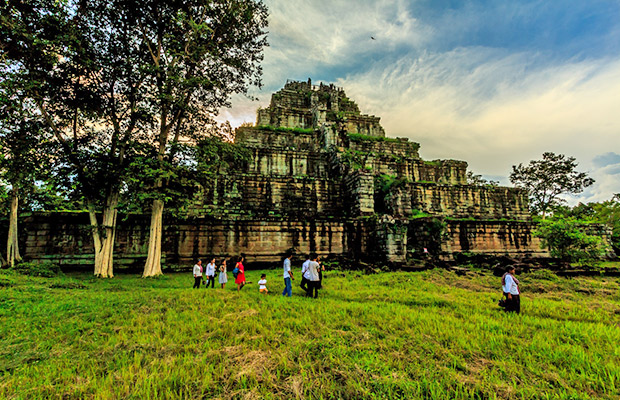
Trekking & Camping Tour in Cambodia has become possible after the Khmer Rouge has integrated all their forces into government forces in 1998. Then demining projects have been implemented around ...
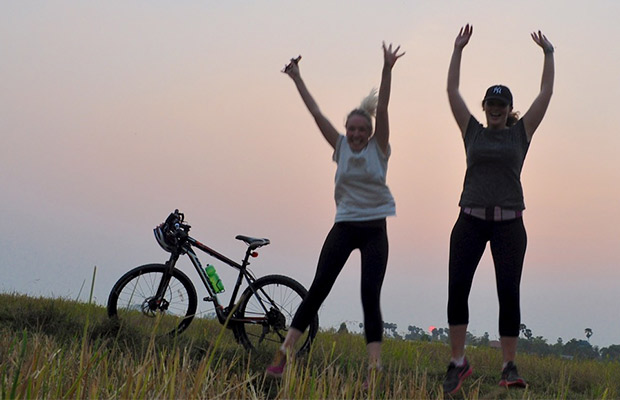
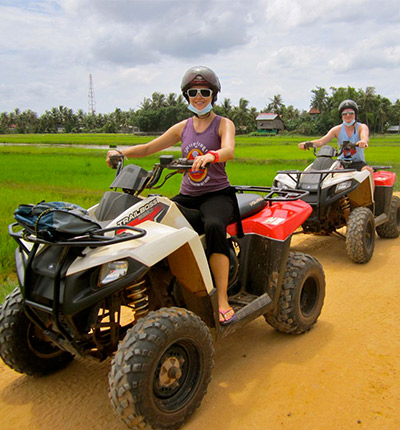
Escape the tourist trail for a scenic sojourn in the Cambodian countryside on this easy 4.5-hour bike excursion from Siem Reap. Wind your way down dirt tracks and hidden trails on an 18-mile (30-km) ...
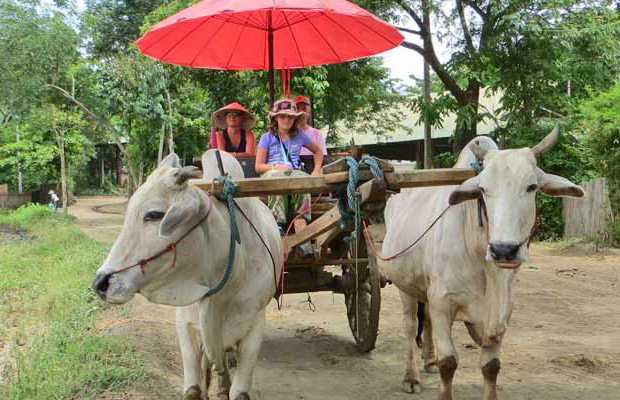
Experience with an ox cart ride to visit the beauty of the surrounding landscape, along the way discovering rice-paddy field, seasonal farming methods, other daily activities of local people and ...
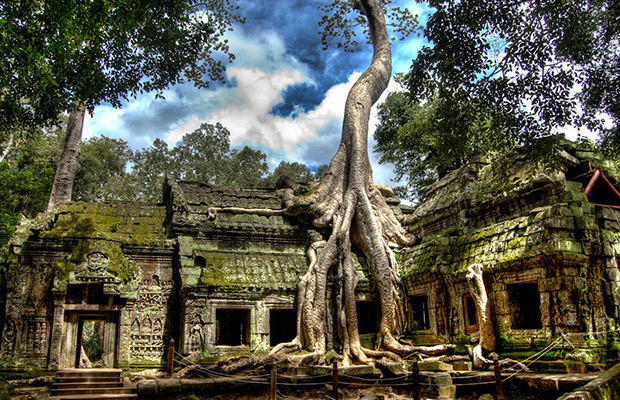
Your morning begins with a visit to Angkor Thom, the last and most stable capital city of the former Khmer empire. Delve deep into the history of the city and explore its notable temples as your ...
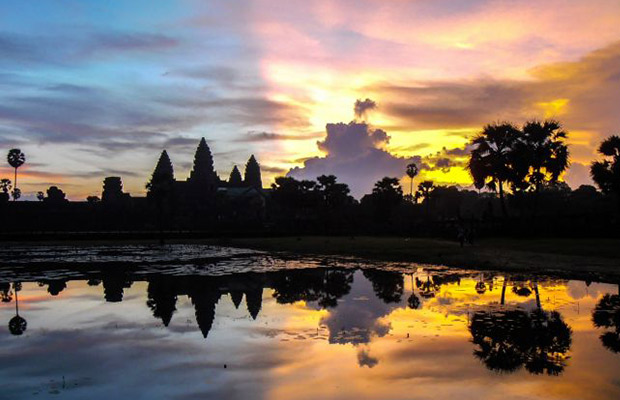
Visit the unmissable temples of the greater Angkor area on this fun-filled two-day tour. As it’s an overnight tour, you won’t have to worry about missing out on anything important, or cramming ...

Especially designed for family to Cambodia. We will prepare a slow-paced tour itinerary for you and your children and take care of all the details to make sure you will have a comfortable biking tour ...

Sok San Road, Steung tmay villa Siem Reap, Cambodia, Siem Reap, Cambodia
Best Deal!
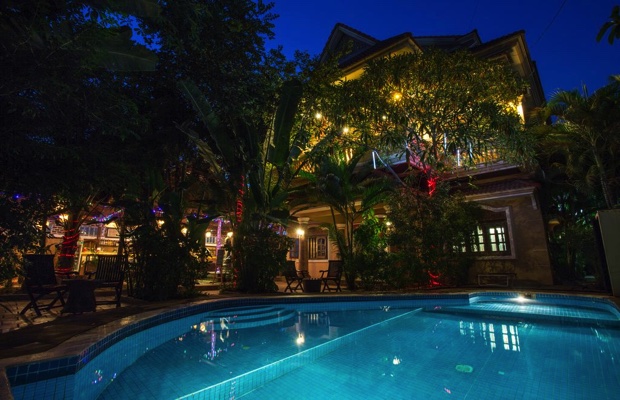
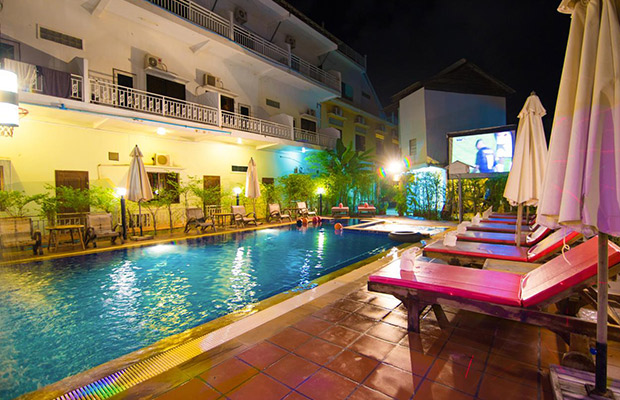
Located only 7 km from the stunning Angkor Wat ruins, Le Tigre Hotel is a statuesque colonial-style villa in the heart of Siem Reap. It has an in-house restaurant and features a tropical garden and an outdoor pool. Free WiFi is available.
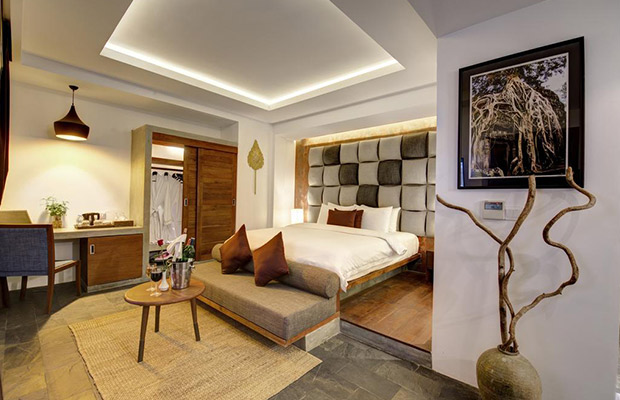
Rooms feature tiled floors and blends traditional woodwork panelling with contempory furnishing. Its air-conditioned rooms offer 24-inch flat-screen TVs. There is also a refrigerator and a safe box in each room.
Le Tigre Hotel is located in the heart of Siem Reap on Sok San Road, a lively area abundant with restaurants and locally-owned shops. It is a 3-minute ride to the Old Market, Pub Street and the Night Market. Angkor Wat is approximately 20 minutes away.
Guests can enjoy many dining options at the hotel's in-house restaurant and bar nestled within the gardens.
Le Tigre offers free scheduled tuk tuk rides to Pub Street and Old Market. Staff at the reception desk can provide bicycle and car rentals.
This is our guests' favourite part of Siem Reap, according to independent reviews.
Couples particularly like the location — they rated it 8.6 for a two-person trip.
We speak your language!

Group 07, Wat Damnak, Siem Reap Central Area, Siem Reap, Cambodia
Breakfast Included
One of our bestsellers in Siem Reap! Solitaire Damnak Villa Hotel is located just 150 m from the bustling Pub Street and Old Market in Siem Reap. Boasting Khmer hospitality and service, Solitaire Damnak Villa Hotel is boasts an indoor saltwater pool with a terrace and guests can enjoy meals at the in-house restaurant.
It is nestled behind the famous Wat Damnak library and 6.9 km from Angkor Wat. Siem Reap - Angkor International Airport is 8 km away.
Adorned with local handicrafts, each air-conditioned suite at Solitaire Damnak Villa Hotel comes with a balcony offering city views and free WiFi. It features a safe, minibar and electric kettle. Offering views of the city, the accommodation also has a private bathroom fitted with a shower and hairdryer.
A tour desk, ticket service, luggage storage and concierge are available at Solitaire Damnak Villa Hotel.
This is our guests' favourite part of Siem Reap, according to independent reviews.
Solo travellers particularly like the location — they rated it 8.6 for a one-person stay.
We speak your language!
Heart of Wonder Villa Tmey Village, Svay Dangkom Commune, Siem Reap, Cambodia
Best for Traveller!
One of our top picks in Siem Reap.
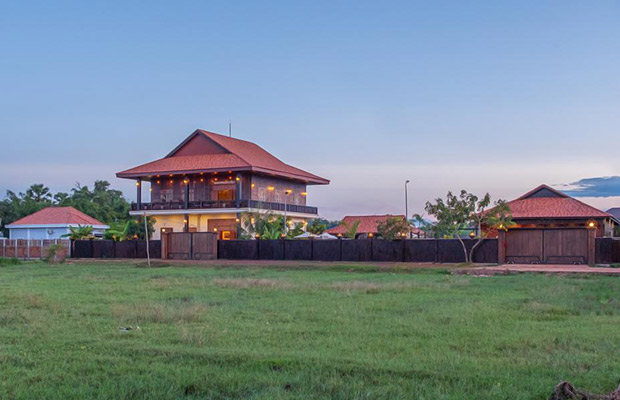
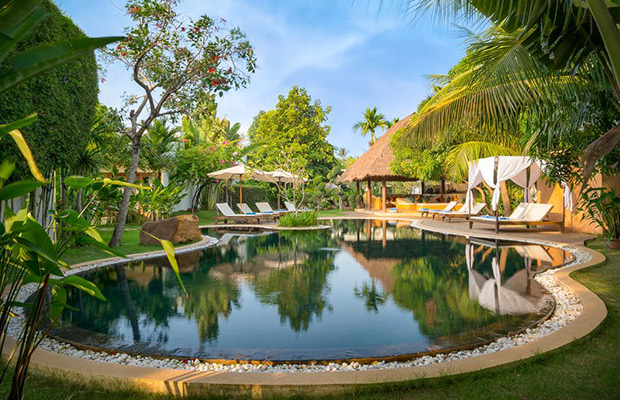
Heart of Wonder Countryside Resort is situated in Siem Reap. The accommodation features a 24-hour front desk as well as free WiFi. The villa is surrounded by rice paddies, banana, coconut and palm trees as well as rural folk going about their daily business.
Each room is fitted with a flat screen TV, a hairdryer and a safety deposit box. There is a spacious bathroom with shower and bathtub as well as a sofa, large desk and closet in each room. A huge lobby and sitting area, with comfortable furniture and chairs, is adjacent to each room.
Heart of Wonder Countryside Resort offers an outdoor pool. The area is popular for cycling, and car hire is available at the accommodation. Dramatic sunrise and sunset views can be enjoyed from the balcony.
Angkor Wat is 9.2 km from Heart of Wonder Countryside Resort. Siem Reap - Angkor International Airport is 9 km from the property. Old Market/Pub Street is 2.9 km away.
Solo travellers particularly like the location — they rated it 8.9 for a one-person stay.
This property is also rated for the best value in Siem Reap! Guests are getting more for their money when compared to other properties in this city.
We speak your language!

545 Airport Road No. 6, Siem Reap, Cambodia
Best Location!
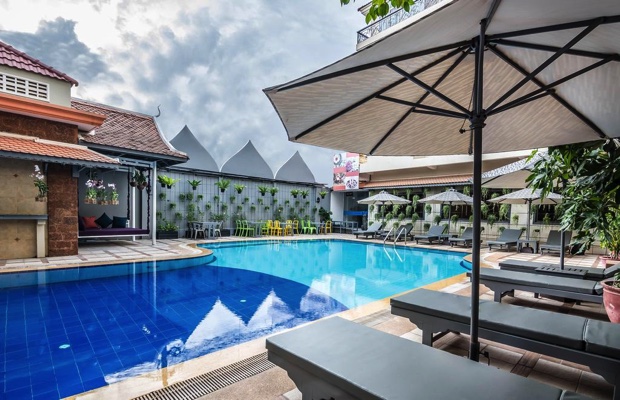
Located only a minute's walk from the Angkor Market and a 3-minute drive by Tuk Tuk to the vibrant Pub Street, Memoire Siem Reap Hotel features an outdoor swimming pool and a fitness center. Guests can enjoy meals at the in-house restaurant or have a drink at the Artist Lounge. Free WiFi is available throughout the property and there is free parking on-site.
Memoire Siem Reap Hotel is a short 10-minute drive from Siem Reap-Angkor International Airport and the famous Angkor Wat. The property offers complimentary airport transfer services.
Fitted with tiled flooring and traditional Khmer decor, rooms are painted with color choices infusing the local charm. Every room is equipped with a satellite TV and a mini-bar. Some rooms come with a private balcony overlooking the pool.
Memoire Siem Reap Hotel's restaurant serves a selection of local and Western dishes. For those who would like to dine in, room service is available.
Transport rentals are provided at the property. For convenience, the front desk opens 24 hours. Memoire Siem Reap Hotel's tour desk offers assistance with visits to local attractions. Guests may make use of the business center, or relax with a massage. Alternatively, they can visit the souvenir shop to buy gifts for their loved ones.
This is our guests' favorite part of Siem Reap, according to independent reviews.
Couples in particular like the location – they rated it 9.1 for a two-person trip.
This property is also rated for the best value in Siem Reap! Guests are getting more for their money when compared to other properties in this city.
We speak your language!
Angkor High School Road, Siem Reap, Cambodia
Best Value!
Tucked away from the hustle and bustle of Siem Reap centre, Navutu Dreams Resort & Wellness Retreat houses 3 swimming pools, 2 yoga studios, a fitness centre and a restaurant. It provides free WiFi throughout the property, and is a 7-minute TukTuk drive from Old Market and Pub Street.
Navutu Dreams Resort is 15-minute drive from Tonle Sap Lake and a 20-minute drive from the Angkor Wat, a World Heritage site. The resort provides free pick-up from Siem Reap International Airport as well as free shuttle service to the city centre.
Tastefully decorated, elegant rooms feature modern interiors with air conditioning. Spacious rooms are fitted with a private patio and garden that offers views of the pool or manicured gardens. Each well-appointed unit is equipped with a comfortable living area, flat-screen cable TV and large bathroom with 2 showers or a separate shower and bathtub.
The resort offers a lounge, spa and wellness centre. It houses a private room for acupuncture and other healing practices as well as a well-equipped gym. Free bicycle rentals are also available at the property.
Guests of Navutu can participate in a session of morning or afternoon, detox or de-stress yoga class. They can choose to have one of the resort's Spa sessions, enroll in a cooking class or embark on a personal journey to discover mystical Angkor or to explore bustling Siem Reap.
Niam Niam restaurant offers Cambodian dishes as well as Italian and other international cuisine. The resort has a special Wellness Menu for advocates for healthy living. At the gardens, private celebrations may be arranged with the assistance of the resort team.
Couples particularly like the location — they rated it 8.3 for a two-person trip.
This property is also rated for the best value in Siem Reap! Guests are getting more for their money when compared to other properties in this city.
We speak your language!

No. 83, Street Psar Kroung, Siem Reap, Cambodia
Best Seller!
Blossoming Romduol Lodge offers dormitory and private rooms with an outdoor swimming pool, spa treatments and free WiFi throughout the property. The property also has a restaurant, billiards, free private parking and free bicycles for guests.
Located in Siem Reap city centre, it is 500 m from Psar Chas (The Old Market). Angkor Wat is 8 km away, while Siem Reap - Angkor International Airport is 9 km from the property. The property offers complimentary pickup services from the airport or bus station.
Private rooms feature either air conditioning or a fan. Certain rooms come with garden views, a flat-screen cable TV and a refrigerator. A private bathroom is fitted with hot shower facilities, towels and free toiletries. Slippers are provided in all rooms.
The property’s front entrance leads to a garden area, which features a water wheel and a pond. Facilities include a 24-hour front desk, currency exchange, ticketing services, a shared lounge and free fish spa. Angkor Wat Tours by car or tuk tuk can be arranged at an additional charge. Complimentary use of bicycles is available for guests who wish to explore the surrounding area. Union Pay is accepted at this property.
Sweet Lullaby Restaurant serves traditional Khmer, fusion and International dishes.
This is our guests' favourite part of Siem Reap, according to independent reviews.
Couples particularly like the location — they rated it 8.8 for a two-person trip.
This property is also rated for the best value in Siem Reap! Guests are getting more for their money when compared to other properties in this city.
We speak your language!
Being the locals, we know the true value of our land. We always listen and arrange everything as your desire. Please kindly send us whatever about your trip,we will send you best offers quickly.






Guest Name: Mrs. Ilka Grahn
Country: Germany
City: Mühltal
N.of Person: 2 pax
Travel date: 2026-10-20
Booked: Phnom Aural Wildlife Sanctuary
Tour Style:
Duration: