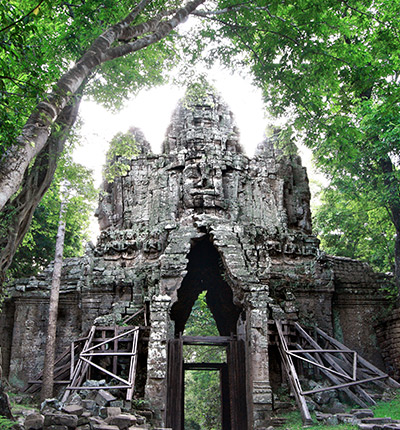
East Mebon is a large temple-mountain-like ruin, rising three levels and crowned by five towers. Jayavarman IV, a usurper, moved the capital from Angkor to Koh Ker in 928AD. Sixteen years later Rajendravarman II returned the capital to Angkor and shortly thereafter constructed East Mebon on an island in the middle of the now dry Eastern Baray. The temple is dedicated to Shiva in honor of the king’s parents. Inscriptions indicate that it was also built to help reestablish the continuity of kingship at Angkor in light of the interruption that occurred when the seat of power had been moved to Koh Ker. There is some scholarly debate as to whether East Mebon should be categorized as a temple-mountain. Inscriptions record activity as early as 947AD, but the temple was not consecrated until 952AD.
The East Mebon(Khmer: ប្រាសាទមេបុណ្យខាងកើត) is a 10th Century temple at Angkor, Cambodia. Built during the reign of King Rajendravarman, it stands on what was an artificial island at the center of the now dry East Baray reservoir.
The East Mebon was dedicated to the Hindu god Shiva and honors the parents of the king. Its location reflects Khmer architects’ concern with orientation and cardinal directions. The temple was built on a north-south axis with Rajendravarman’s state temple, Pre Rup, located about 1,200 meters to the south just outside the baray. The East Mebon also lies on an east-west axis with the palace temple Phimeanakas, another creation of Rajendravarman’s reign, located about 6,800 meters due west.
Built in the general style of Pre Rup, the East Mebon was dedicated in 953 AD. It has two enclosing walls and three tiers. It includes the full array of durable Khmer construction materials: sandstone, brick, laterite and stucco. At the top is a central tower on a square platform, surrounded by four smaller towers at the platform’s corners. The towers are of brick; holes that formerly anchored stucco are visible.
The sculpture at the East Mebon is varied and exceptional, including two-meter-high free-standing stone elephants at corners of the first and second tiers. Religious scenes include the god Indra atop his three-headed elephant Airavata, and Shiva on his mount, the sacred bull Nandi. Carving on lintels is particularly elegant.
Visitors looking out from the upper level today are left to imagine the vast expanses of water that formerly surrounded the temple. Four landing stages at the base give reminder that the temple was once reached by boat.
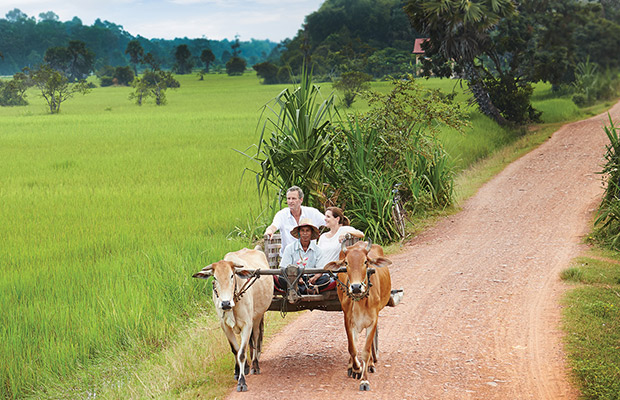
Join our experience guide on a journey out of Siem Reap to a rural village to experience a local mode of transport. We head to Chreav Village, a traditional community surrounded by rice fields. ...

Get an early start to watch the morning light splash over Angkor Wat’s triple towers, a fantastic beginning to your full-day bicycling tour among the ruins of the Angkor Kingdom. Your local guide ...
For active couples who really like to discover Cambodia in only 18 days. A romantic tour, but not only sitting by the pool or lying on the beach. By bike, cyclo, jeep, ferry, trekking and a tuk-tuk, ...
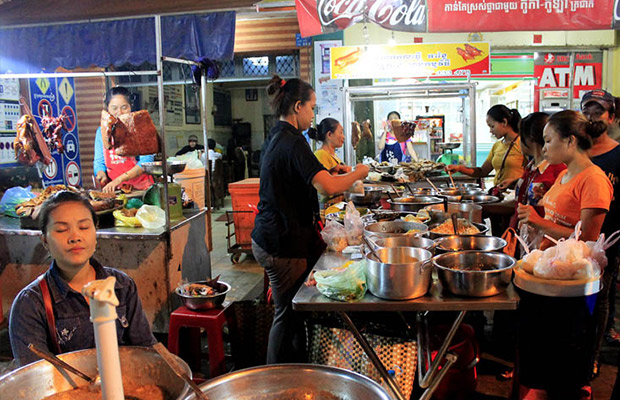
This is a fantastic way to experience local Siem Reap food at night. Join this unique Food Tour in Siem Reap to have the opportunity biting into some tasty regional dishes. On this cultural and ...
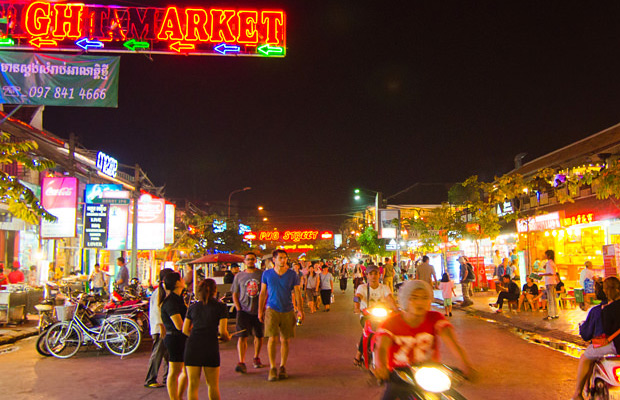
Take a stroll through Siem Reap's inner core and experience this small, yet booming tourist town. Begin your tour with a visit to the Royal Gardens and Residence before making your way through the ...
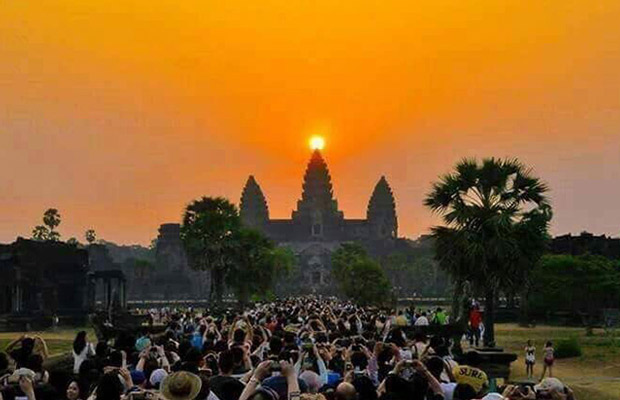
Discover Angkor Wat with one of our expert guides, and see why it’s one of the most beautiful and fascinating places on earth. Our guides will lead you to some of the best locations and give you an ...

Phum Treang Village, Siem Reap, Cambodia
Best for Traveller!
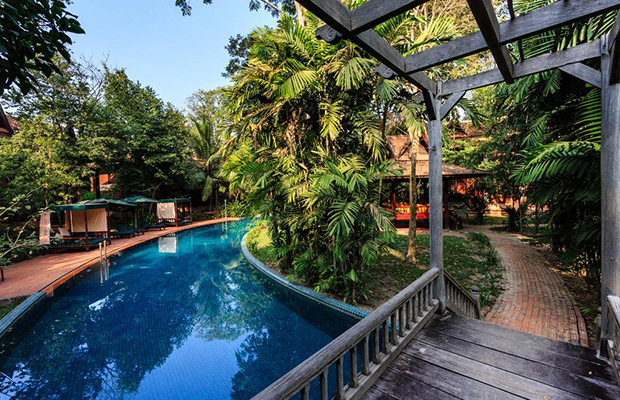
Nestled within private gardens and located just before the entrance of the Angkor Wat Temple complex, Angkor Village Resort & Spa offers accommodation away from the hustle and bustle of Siem Reap. A member of the Small Luxury Hotels of the World, it boasts a 250 m outdoor pool that meanders through lovely landscaped gardens and guests enjoy use of the resort's daybeds. The property offers two in-house dining options and guests can have a drink at the bar.
Angkor Village Resort & Spa is about 5 km from Siem Reap International Airport. The property offers airport pickup services at an additional charge.
Angkor Village’s cottage rooms feature four-poster beds and private balconies. Each room has a flat-screen cable TV and tea/coffee making facilities. Spacious bathrooms are fitted with a hot tub and organic toiletries. Guests are also welcomed with a tropical fruit platter.
Guests can approach the 24-hour front desk for currency exchange, tour arrangements and concierge services. The full-service Spa Village includes saunas, hot tubs and an air-conditioned fitness room. Guests can browse items in the souvenir shop, or watch cultural performances at the on-site outdoor theatre.
The two in-house restaurants - Aaraama and Le Jardin offer a wide range of cuisines, including local, Thai and French choices. Private picnics, afternoon tea, and local cooking classes may also be arranged.
This is our guests' favourite part of Siem Reap, according to independent reviews.
Couples particularly like the location — they rated it 8.7 for a two-person trip.
We speak your language!
Wat Thmei, Kouk Chak, Siem Reap, Cambodia
Best for Couple!
One of our best sellers in Siem Reap!
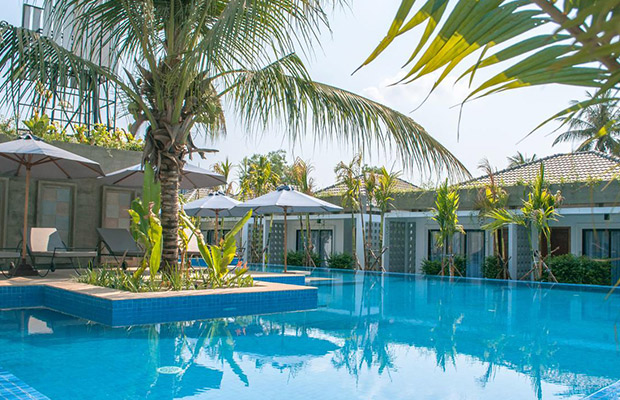
Featuring a garden, terrace and free WiFi, Grand Venus La Residence is located in Siem Reap, 3.7 km from Angkor Wat. This 5-star hotel offers a shared lounge. Guests can enjoy pool views.
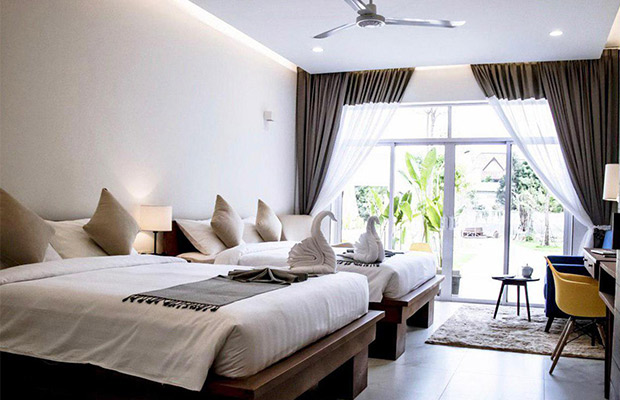
The rooms at the hotel are equipped with a seating area. Rooms come with a coffee machine and a private bathroom, while selected rooms will provide you with a balcony and some have garden views. Guest rooms at Grand Venus La Residence have air conditioning and a desk.
A continental breakfast is served daily at the property. The restaurant at the accommodation specializes in American, Cambodian and Asian cuisine.
Grand Venus La Residence has an outdoor pool. Cycling is among the activities that guests can enjoy near the hotel.
Non-stop assistance is available at the reception.
Pub Street is 4 km from Grand Venus La Residence. The nearest airport is Angkor International Airport, 12.9 km from the accommodation.
Solo travelers in particular like the location – they rated it 9.4 for a one-person stay.
This property is also rated for the best value in Siem Reap! Guests are getting more for their money when compared to other properties in this city.
We speak your language!

Phum Chunlong, Sangkat Salakamrouek, Krong Siem Reap, Siem Reap, Cambodia
Best for Traveller!
Located in Siem Reap, Molito Blanc Postel has a spa & wellness center and garden. With free WiFi, this 4-star hotel offers a 24-hour front desk and room service. There's a restaurant.
A continental breakfast is served every morning at the property.
The hotel has an outdoor pool.
King's Road Angkor is 1.9 km from Molito Blanc Postel, while Pub Street is 2.3 km from the property. The nearest airport is Angkor International Airport, 14.5 km from the accommodation.
We speak your language!
Salakamreuk Road, Salakamreuk Village, Siem Reap, Cambodia
Best Value!
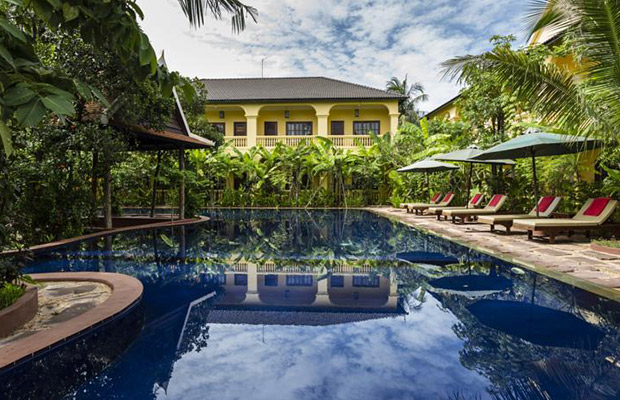
Featuring free WiFi, a swimming pool and on-site restaurant, Le Jardin d'Angkor Hotel & Resort offers accommodation in Siem Reap. The vibrant Pub Street is 2.5 km from the property. A 24-hour front desk is available.
Angkor Wat is 8 km from Le Jardin d'Angkor Hotel & Resort, while Angkor Night Market is 2.5 km from the property. Siem Reap - Angkor International Airport is 6 km away. The property offers complimentary airport pickups and shuttle services to the city centre.
Each air-conditioned room includes a flat-screen TV, safety deposit box and working desk . There is also a seating area for your convenience. All rooms feature views of either the pool or garden. Every room has a private bathroom with shower facilities, bath robes, slippers and free toiletries. Balconies are also available for you to unwind in after a long day.
Guests can approach the 24-hour front desk for currency exchange, tour arrangements, ticketing and concierge services. The hotel also offers bicycle rentals for guests who wish to explore the surrounding area.
This property is also rated for the best value in Siem Reap! Guests are getting more for their money when compared to other properties in this city.
We speak your language!
#60 Road, Angkor Cultural & Tourism Complex Junction, Siem Reap, Cambodia
Best Value!
Sokha Siem Reap Resort & Convention Center offers accommodation away from the hustle and bustle of Siem Reap. The resort has a spa centre and an outdoor swimming pool. Guests can enjoy meals at any of the 5 dining options at the resort or have a drink at the bar. Free WiFi is available throughout the property.
Angkor Wat is 4.1 km from Sokha Siem Reap Resort, while Apsara Theatre is 800 m away. Angkor Pass Ticket Centre can be reached within 300 m away. The nearest airport is Siem Reap - Angkor International Airport, 8 km from Sokha Siem Reap Resort & Convention Center. The property offers a complimentary airport pick-up service.
Air-conditioned rooms have a seating area fitted with a flat-screen TV. Rooms feature views of the pool or garden. All rooms come with a private bathroom. Extras include bath robes and slippers.
Guests can approach the 24-hour front desk for currency exchange, tour arrangements, ticketing and concierge services. The resort also offers bike and car hire at a surcharge. Free shuttle service to the city area is offered in the evening time.
Couples particularly like the location — they rated it 8.6 for a two-person trip.
We speak your language!
Hotel chain/brand: Sokha Hotels & Resorts
National Road No 6, Airport Road, Knar Village Chreav Commune, Siem Reap, Siem Reap, Cambodia
Best Value!
Set in Siem Reap and with Preah Ang Chek Preah Ang Chom reachable within 2.1 km, Bayon Era Hotel offers express check-in and check-out, non-smoking rooms, free bikes, free WiFi and an outdoor swimming pool. Offering a restaurant, the property also has a garden, as well as a fitness centre and a hot spring bath. The accommodation features a 24-hour front desk, a shared kitchen and currency exchange for guests.
At the hotel all rooms are fitted with a private bathroom.
Guests at Bayon Era Hotel can enjoy a continental or a buffet breakfast.
You can play billiards at the accommodation, and bike hire and car hire are available.
The property has an in-house spa centre, hairdresser's and business centre.
Royal Residence is 2.2 km from Bayon Era Hotel, while Lucky Mall Siem Reap is 2 km from the property. The nearest airport is Siem Reap - Angkor International, 10 km from the hotel, and the property offers a paid airport shuttle service.
We speak your language!

Being the locals, we know the true value of our land. We always listen and arrange everything as your desire. Please kindly send us whatever about your trip,we will send you best offers quickly.






Guest Name: Mrs. Ilka Grahn
Country: Germany
City: Mühltal
N.of Person: 2 pax
Travel date: 2026-10-20
Booked: Phnom Aural Wildlife Sanctuary
Tour Style:
Duration: