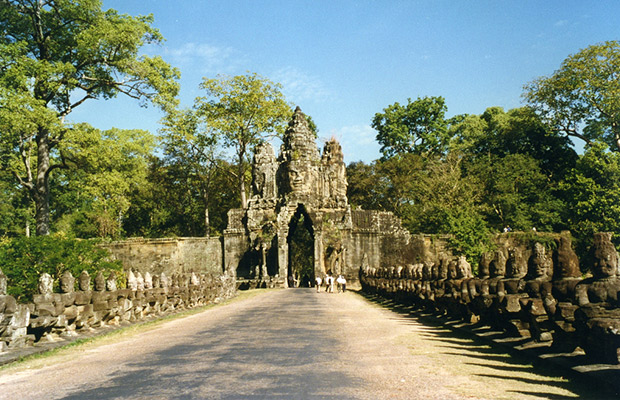
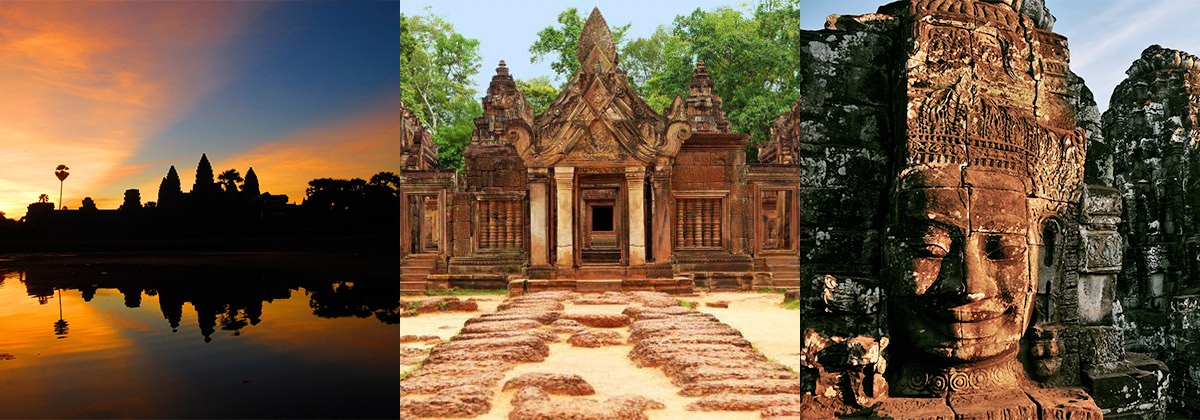
South Gate in Cambodia is not one of the Angkor Temples in itself but one of the five main gates into ancient Angkor Thom, and it is the best preserved and most commonly visited by tourists. Its stature and significance make it feature in our list of small temples, given its religious symbolism and close similarites to the Bayon. ...
South Gate in Cambodia is not one of the Angkor Temples in itself but one of the five main gates into ancient Angkor Thom, and it is the best preserved and most commonly visited by tourists. Its stature and significance make it feature in our list of small temples, given its religious symbolism and close similarites to the Bayon. Built under Jayavarman VII as part of the majestic.
Angkor Thom South Gate (late 12th-early 13th centuries)
Angkor Thom is quadrangle of defensive walls totaling 12 kilometers that once protected the Khmer capital of the same name (Angkor Thom means 'Great City'). Built in the late 12th and early 13th centuries by King Jayavarman VII, the walls are divided by two axes running north-south and east-west. A gateway lies at the end of each axis, four in total, facing the four cardinal directions. An additional gate, called the 'Gate of Victory', pierces the east wall just north of the 'Gate of the Dead', the east gate along the central axis. The significance of the additional gate is that it provided access to a terrace of the royal palace. As for the other gates, the two axes intersect at the center of the enclosed area where the Bayon temple sits.
The south gate of Angkor Thom is the best preserved. It is approached from outside via a causeway that extends about fifty meters across a moat. On each side of the causeway are railings fashioned with 54 stone figures engaged in the performance of a famous Hindu story: the myth of the Churning of the Ocean. On the left side of the moat, 54 'devas' (guardian gods) pull the head of the snake 'Shesha' while on the right side 54 'asuras' (demon gods) pull the snake's tail in the opposite direction. In this myth, the body of the snake is wrapped around the central mountain—Mt. Meru—perhaps corresponding here to the Bayon temple at the center of the site. In any case, the myth relates that as the Devas pulled the snake in one direction and the gods pushed in the other, the ocean began to churn and precipitate the elements. By alternating back and forth, the ocean was 'milked', forming the earth and the cosmos anew.
The central tower of the stone gate is capped by three face-towers that face the four directions (the central tower faces both out and in). Below them at the base of the gate are two sets of elephant statues that flank the entrance on both sides.Sitting on each elephant is a figure of the god Indra carrying his usual weapon, the vadra (a lightning bolt). The gate itself is shaped like an upside-down 'U' and is corbelled at the top (instead of arches, the builders of Angkor preferred to use corbelling to span distances). It is still possible to see where wooden doors once fitted to the gate through openings in the stone.
There is some debate as to the functionality of Angkor Thom as a whole. If it was a wall intended for defense, it was rather poorly designed, since there is nowhere along the wall for defenders to take refuge from incoming fire or shoot back from a shielded location. This is surprising since Angkor had been sacked in 1177 by Champa invaders, and one can readily imagine that its new King, Jayavarman VII would have been concerned with defense should the invaders return.
If not intended for defense, the walls may simply have been an additional enclosure around the Bayon temple, more for ceremony than for practical use. As in Southern India, the Angkor rulers built temples surrounded by walls, but usually not with walls as thick and grand as those of Angkor Thom.
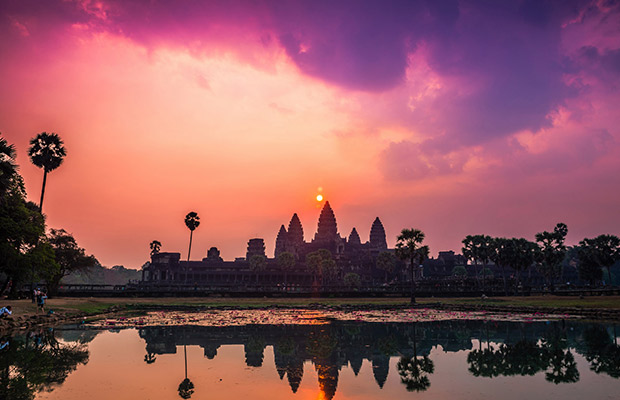
Cover ground you couldn’t hope to cover on public transport without the delays of a group tour on this 2-day private tour of Angkor Wat’s key highlights. Check off Angkor Wat, Angkor Thom, Ta ...
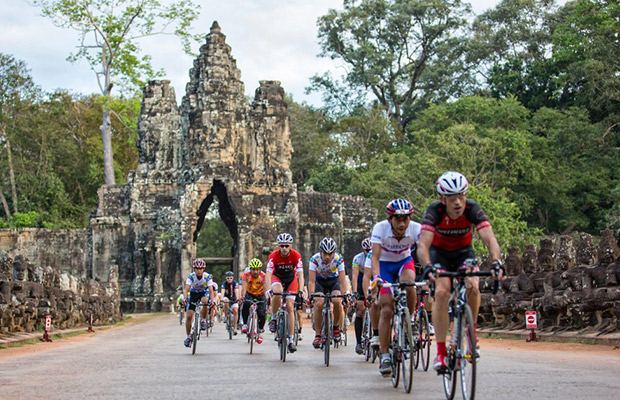
Pedal your way around the glorious temples of Angkor on this 4-hour guided bike tour from Siem Reap. Glide around the vast temple complex, stopping to pose for photo by Angkor Wat, explore the ...
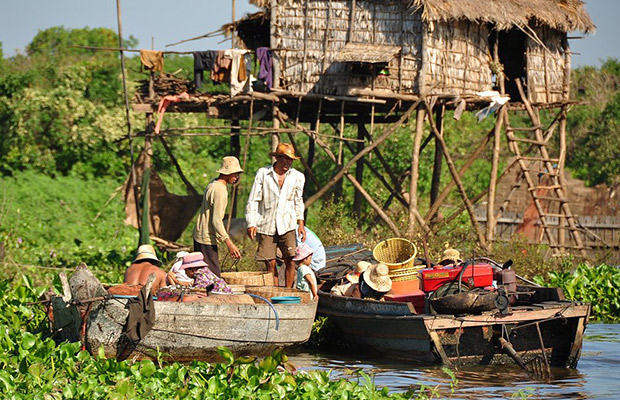
Head off-the-beaten-track and visit the floating village of Kompong Khleang on this 4-hour small-group tour from Siem Reap, including hotel pick-up. Get an insight into rural life as you visit the ...
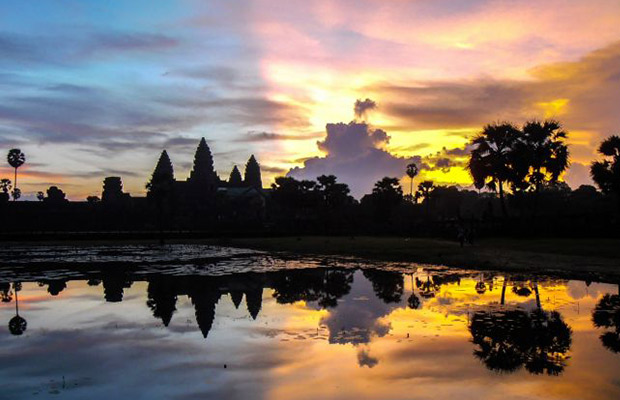
Visit the unmissable temples of the greater Angkor area on this fun-filled two-day tour. As it’s an overnight tour, you won’t have to worry about missing out on anything important, or cramming ...
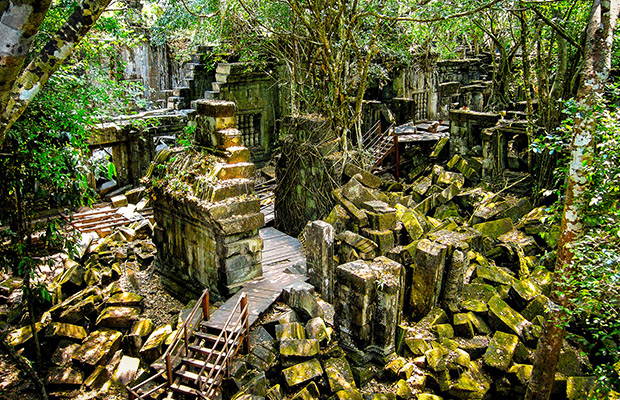
Beng Mealea surpasses even the famous Ta Prohm for atmosphere. Romantically draped in jungle vegetation, Beng Melea offers visitors a chance to discover Angkor all over again. The whole site is ...
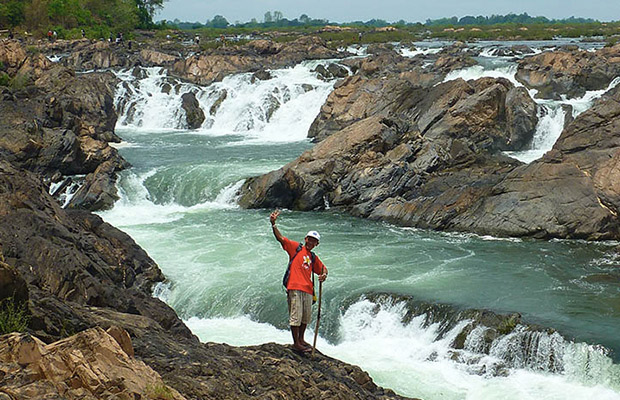
Visit Angkor Wat, Banteay Srei, Bayon, Beng Mealea, Koh Ker, Ta Prohm, Tonle Sap boat trips, Phnom Kulen Waterfall, Preah Vihear and Sopheak Mitt ...

Vithei Charles de Gaulle, Road to Angkor Wat, Siem Reap of Cambodia., Siem Reap, Cambodia
Best Seller!
One of our bestsellers in Siem Reap!
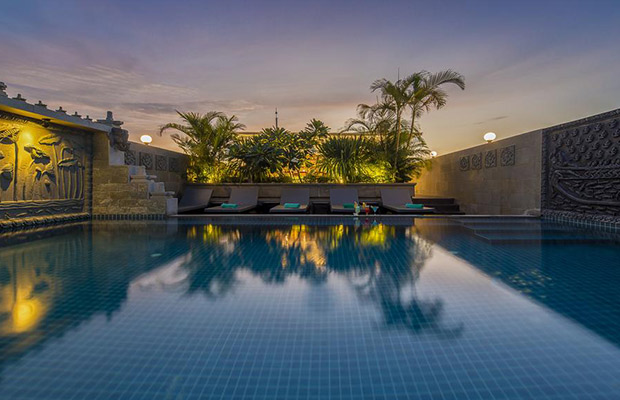
Located along the Charles de Gaulle district, The Grand Cyclo Boutique Suite offers accommodation in central Siem Reap. It features a rooftop swimming pool and guests can enjoy meals at the in-house restaurant or have a drink at the bar. Free WiFi is available in all rooms.
It is 2.4 km to the vibrant Pub Street and Old Market. Angkor Wat is 7 km from The Grand Cyclo Boutique Suite, while Angkor National Museum is 650 m from the property. The nearest airport is Siem Reap - Angkor International Airport, 6.8 km from The Grand Cyclo Boutique Suite. The property offers complimentary pickup services from the airport.
Featuring traditional Cambodian-style decor, air-conditioned rooms are equipped with a flat-screen TV and a small refrigerator. En suite bathrooms come with shower facilities and a hairdryer. Tea/coffee making amenities are also provided.
Guests can 24-hour front desk for currency exchange, tour arrangements, ticketing and concierge services. A spa centre is available for guests who wish to indulge in massage treatments.
The in-house restaurant serves up a variety of authentic Cambodian dishes while a selection of alcoholic beverages can be enjoyed at the rooftop bar. Alternatively, guests can choose from a range of in-house dining options.
This is our guests' favourite part of Siem Reap, according to independent reviews.
Couples particularly like the location — they rated it 8.3 for a two-person trip.
This property is also rated for the best value in Siem Reap! Guests are getting more for their money when compared to other properties in this city.
We speak your language!
Oknha Oum Chhay Street, Mondul II Village,Svay Dangkum Commune, Siem Reap, Cambodia
Best for Traveller!
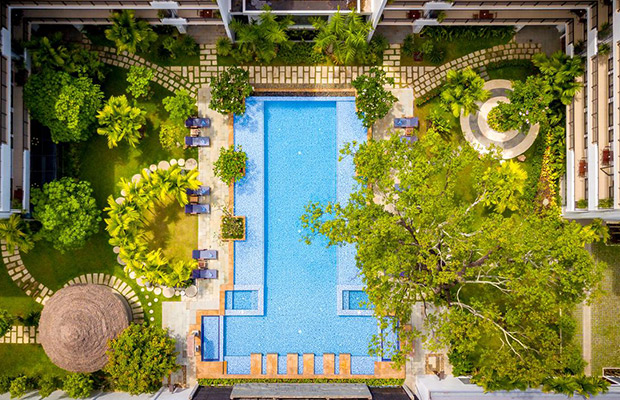
Offering an outdoor swimming pool and barbecue facilities, Koulen Hotel is located in the heart of Siem Reap, not far from Pub Street and King's Road Angkor. Free WiFi is featured.
The rooms have a fully equipped kitchenette with a microwave and a fridge. All rooms are air-conditioned and include a terrace and/or a balcony. There is also a dining table in the living room.
A buffet breakfast is available each morning at the property. There is an in-house restaurant, which serves a variety of American and Asian dishes.
The aparthotel provides an ironing service, as well as business facilities like fax and photocopying. Guests can relax in the garden at the property.
Angkor Wat is 6 km from Koulen Hotel. Siem Reap - Angkor International Airport is 7 km away.
This is our guests' favourite part of Siem Reap, according to independent reviews.
This property also has one of the best-rated locations in Siem Reap! Guests are happier about it compared to other properties in the area.
Couples particularly like the location — they rated it 9.5 for a two-person trip.
This property is also rated for the best value in Siem Reap! Guests are getting more for their money when compared to other properties in this city.
We speak your language!

Bopha Leak Kloun Street, Steung Thmey Village, Siem Reap, Cambodia
Best Seller!
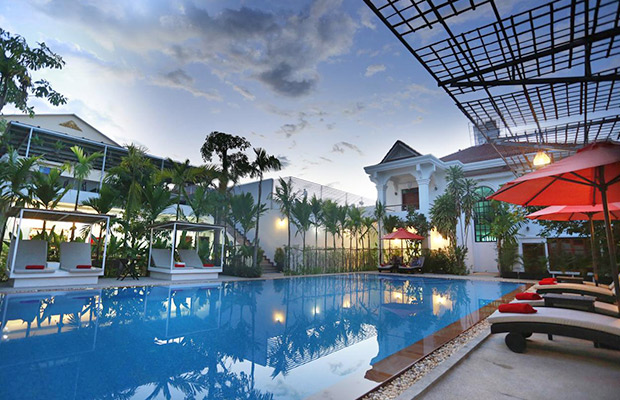
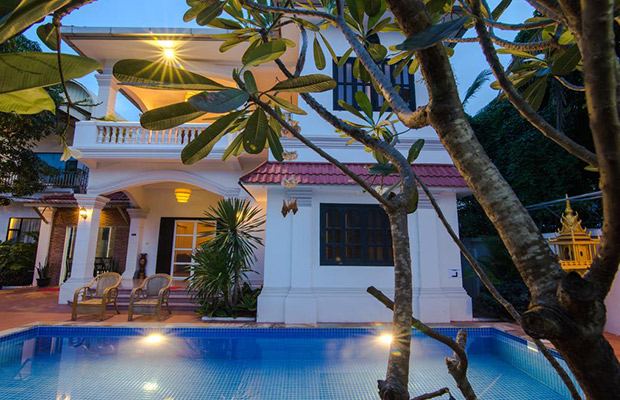
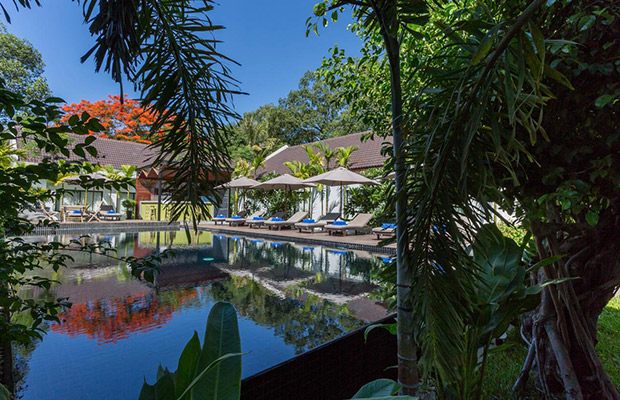
Conveniently located in Siem Reap, Rose Royal Boutique Villa features a 24-hour front desk and a business centre. Guests have access to the large outdoor salt-water pool with plenty of sun lounges. Offering free WiFiaccess throughout the property, Rose Royal Boutique Hotel is just 1 km from the famous Old Market and Pub Street.
This non-smoking property is 300 m to Angkor Night Market, while Siem Reap International Airport and Cultural Village are within 7 km away. The well-known Tonle Sap Lake can be reached with a 12 km drive. Shuttle services can be arranged at a surcharge.
Decorated in hues of green, air-conditioned rooms come with tiled flooring, personal safe and sofa seating area. Minibar, bathrobes and a flat-screen cable TV are also included. The en suite bathroom offers shower facility, hairdryer and free toiletries.
Guests at Rose Royal Boutique Villa can rent a bicycle/car to explore the vicinity, or approach the friendly staff for sightseeing and travel assistance. Conveniences such as currency exchange, luggage storage and babysitting services are also available.
The in-house restaurant serves a menu of a la carte dishes for guests to enjoy. A variety of wine and cocktails can be ordered from the bar, while room service options are provided on request.
This is our guests' favourite part of Siem Reap, according to independent reviews.
This property also has one of the best-rated locations in Siem Reap! Guests are happier about it compared to other properties in the area.
Couples particularly like the location — they rated it 9.3 for a two-person trip.
This property is also rated for the best value in Siem Reap! Guests are getting more for their money when compared to other properties in this city.
We speak your language!

10 Makara, Sala Komreuk, Siem Reap, Siem Reap, Cambodia
Best Location!
One of our top picks in Siem Reap.
Located in the center of Siem Reap, Aster Vila offers air-conditioned accommodations equipped with a LED TV and free WiFi. This family-run hotel is a 15-minute walk from Pub Street and a 8-minute drive from Angkor Night Market.
The villa is equipped with a refrigerator, coffee facilities, bottled water and linens.
An activity in the surrounding area includes biking and the property offers free bike rental service for guests.
Angkor Wat is a 20-minute drive from the villa. Siem Reap - Angkor International Airport is a 25-minute drive from the property.
This is our guests' favorite part of Siem Reap, according to independent reviews.
Couples in particular like the location – they rated it 8.4 for a two-person trip.
This property is also rated for the best value in Siem Reap! Guests are getting more for their money when compared to other properties in this city.
We speak your language!
Acha Sva Road, Street 20, Siem Reap, Cambodia
Breakfast Included
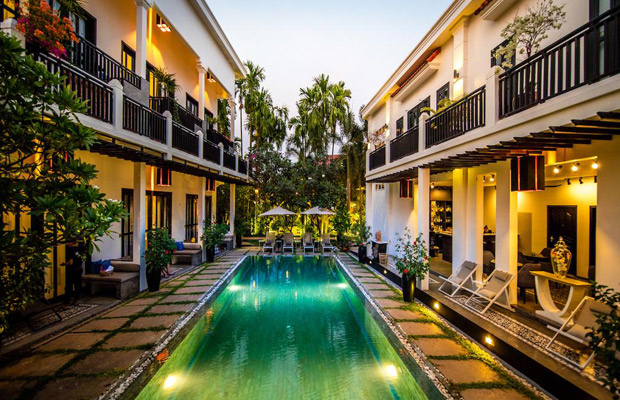
Only 800 m from the lively Pub Street, Lynnaya Urban River Resort is a beautifully furnished property located in the heart of Siem Reap. It welcomes guests with an outdoor pool and free WiFi access throughout the property. Free parking is also available. Staff are able to converse in English, Chinese, French, Khmer, Korean and Japanese.
Rooms feature classic Cambodian-style furnishings. Amenities include a flat-screen cable TV, an electric kettle, comfortable seating area and air conditioning. Stylish en suite bathrooms come with a hairdryer, toothbrushes and free toiletries. Slippers are available for your convenience.
Rejuvenate with a soothing spa treatment or traditional massage. Friendly staff at the 24-hour front desk can assist you with laundry services, airport transfers and car/bicycle rentals. Last minute souvenirs can be purchased at the on-site gift shop.
Lynnaya Urban River Resort is 5.9 km away from the famous Angkor Wat – a UNESCO World Heritage Site. The Royal Residence is just 200 m away while Siem Reap – Angkor International Airport is only 8 km from the resort. The resort offers complimentary pickup services from the airport.
Guests can unwind with a refreshing cocktail or glass of wine at the bar. Palate Restaurant serves up an array of Cambodian cuisines as well as a wide selection of other Asian and international dishes. For your convenience, room service options are available and Union Pay is accepted here.
This is our guests' favourite part of Siem Reap, according to independent reviews.
This property also has one of the best-rated locations in Siem Reap! Guests are happier about it compared to other properties in the area.
Couples particularly like the location — they rated it 9.5 for a two-person trip.
This property is also rated for the best value in Siem Reap! Guests are getting more for their money when compared to other properties in this city.
We speak your language!
City center area, phum Steng Tmey, Sangkat Svay Dongkum, Siem Reap, Siem Reap, Cambodia
Best Location!
Set in the very heart of Siem Reap , the peaceful Mulberry Boutique Hotel is centrally located in just a few minutes walks to night market, city center, local restaurants, phone shop, minimart and ATM. Free WiFi is available.
Mulberry Boutique Hotel offers various accommodation types. They are fully air conditioned and fitted with fine beddings and furnishings. They have flat-screen cable TVs, laptop safes and comfortable seating areas. Some rooms have private balconies, spa baths and private gardens.
The restaurant serves a variety of Cambodian and Western dishes. Room service is also provided. The poolside bar offers a wide selection of mocktails/cocktails, international wines and local beverages.
Other facilities include a 24-hour front desk and a tour desk. Guests can also utilize the motorbike or bicycle rental services to get around the area. Guests can relax by the swimming pool or request for a pampering massage.
The Mulberry Hotel is situated about 7 km from Siem Reap International Airport and a 15-minute drive from Angkor Wat Temple. For guests' convenience free airport pick-up services can be arranged upon request.
This is our guests' favourite part of Siem Reap, according to independent reviews.
This property also has one of the best-rated locations in Siem Reap! Guests are happier about it compared to other properties in the area.
Solo travellers particularly like the location — they rated it 9.8 for a one-person stay.
This property is also rated for the best value in Siem Reap! Guests are getting more for their money when compared to other properties in this city.
We speak your language!
Being the locals, we know the true value of our land. We always listen and arrange everything as your desire. Please kindly send us whatever about your trip,we will send you best offers quickly.






Guest Name: Mrs. Ilka Grahn
Country: Germany
City: Mühltal
N.of Person: 2 pax
Travel date: 2026-10-20
Booked: Phnom Aural Wildlife Sanctuary
Tour Style:
Duration: